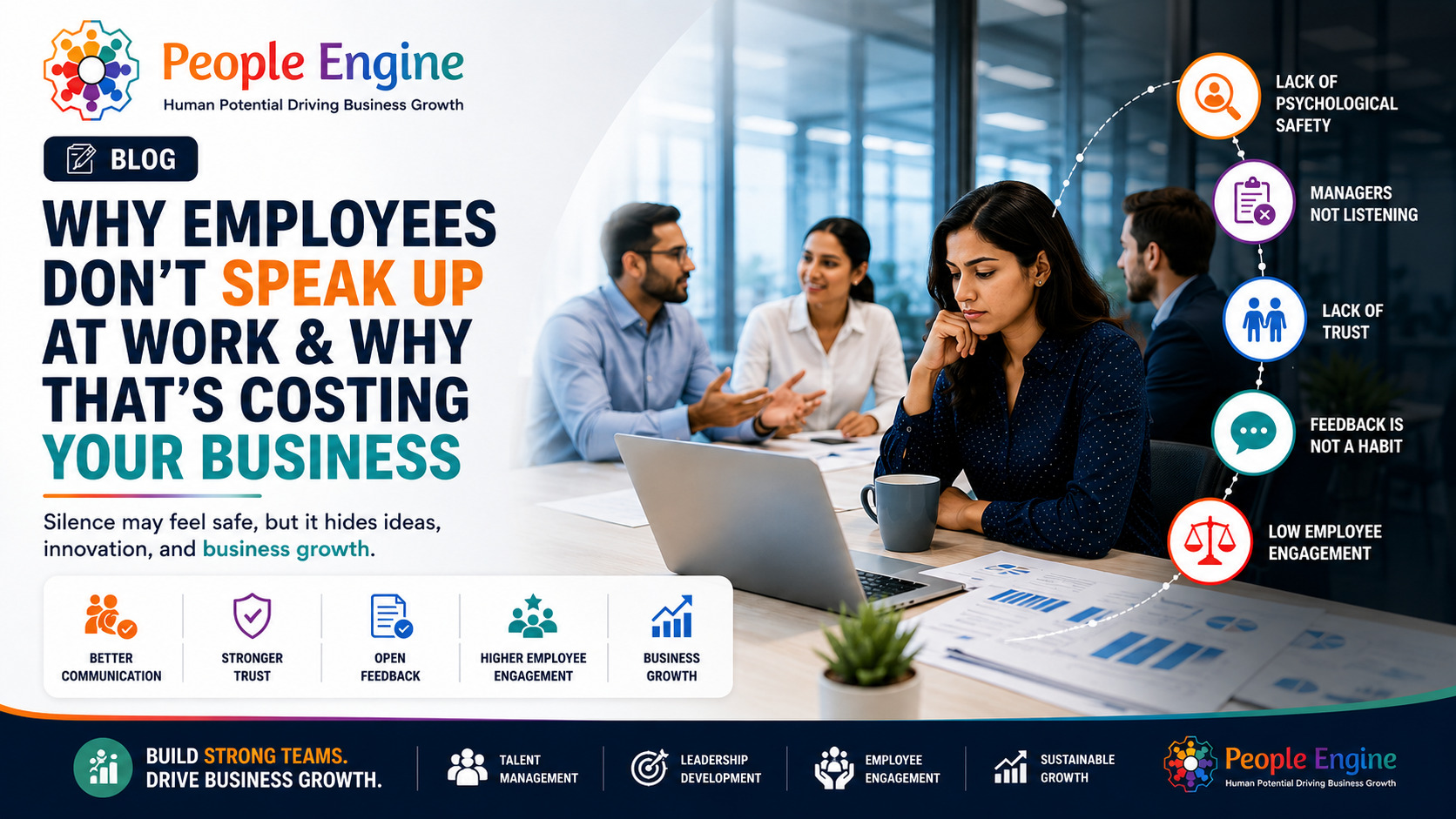
Have you ever asked your team, "Any suggestions?" and been met with complete silence?
It might seem like everything is fine. But in reality, silence at work is often a warning sign.
Employees usually have ideas, concerns, and feedback. If they choose not to share them, it's often because they don't feel safe, don't think anyone will listen, or fear being judged.
When employees stop speaking up, businesses miss out on better ideas, stronger teamwork, and opportunities to grow.
Why Employees Stay Silent
Here are some of the biggest reasons employees don't share what's on their mind.
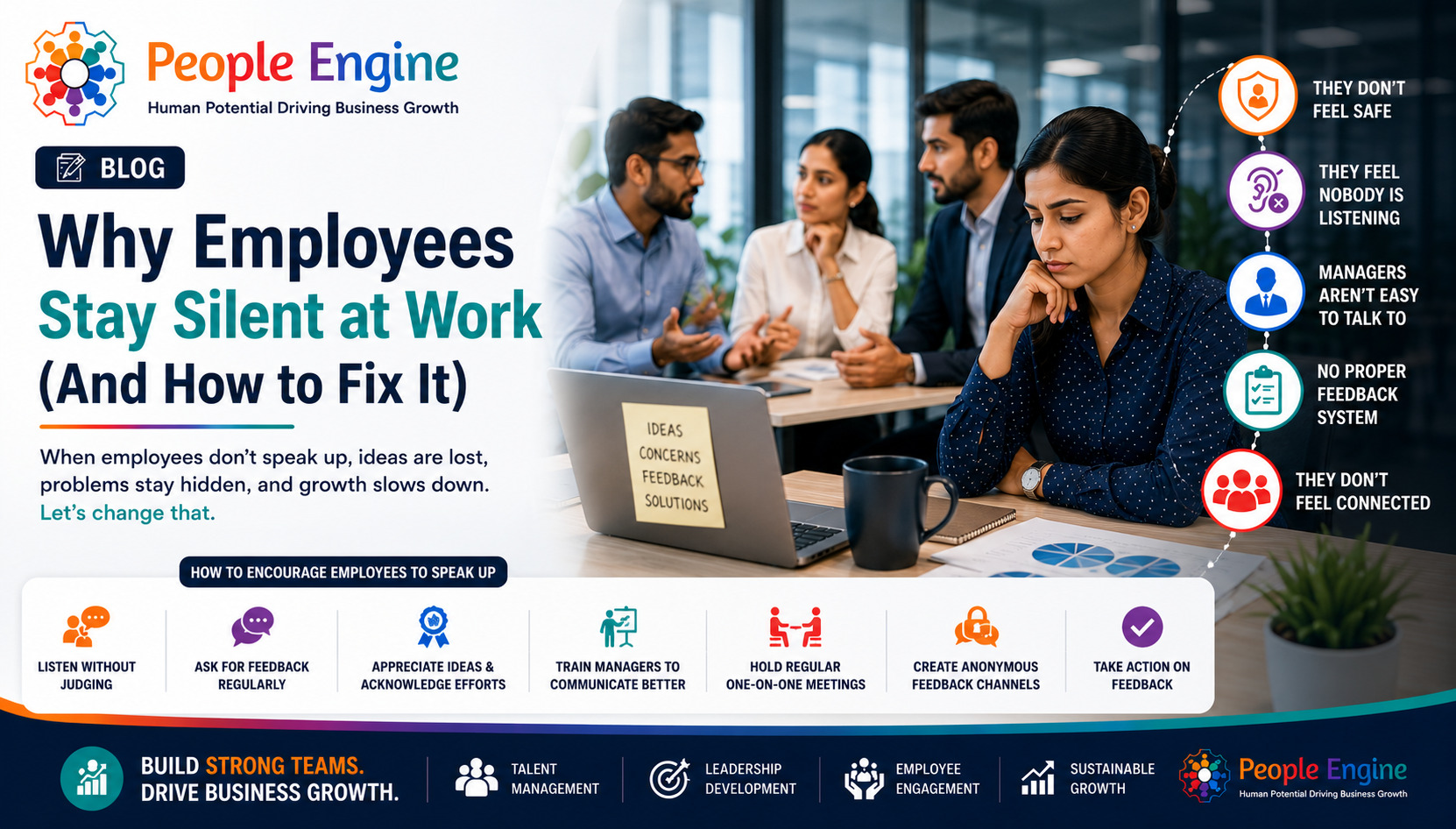
1. They Don't Feel Safe
If employees think they'll be criticized, ignored, or blamed for speaking honestly, they'll keep quiet.
Over time, this creates a workplace where people only do what's expected instead of sharing new ideas or solving problems. A healthy workplace should encourage open conversations, not fear.
2. They Feel Nobody Is Listening
Imagine giving feedback several times and never hearing anything back. Sooner or later, you'd stop trying.
Employees want to know that their opinions matter. Even if every suggestion can't be implemented, acknowledging their feedback builds trust.
3. Managers Aren't Easy to Talk To
The relationship between employees and their managers plays a huge role in workplace communication.
If managers only point out mistakes, rarely appreciate good work, or don't listen without interrupting, employees become hesitant to speak. This is why investing in Leadership Training Services is so important. Good leaders create an environment where people feel comfortable sharing ideas.
4. There Is No Proper Feedback System
Many companies expect employees to speak up, but they don't provide the right opportunities.
Simple practices like one-on-one meetings, anonymous surveys, regular feedback sessions, and performance reviews can make employees feel heard. When feedback becomes part of the company culture, communication improves naturally.
5. Employees Don't Feel Connected
People are more likely to share ideas when they feel they are part of something meaningful.
If employees don't understand the company's goals or don't feel valued, they become less engaged. Engaged employees don't just complete tasks—they actively help the business improve.
How Employee Silence Hurts Your Business
When employees stop speaking up, the impact goes beyond communication. Your business may experience:
- Lower employee engagement
- Missed opportunities for innovation
- Poor teamwork
- Higher employee turnover
- Reduced productivity
- Unresolved workplace issues
- Slower business growth
Sometimes, your biggest business problem isn't a lack of talent—it's a lack of communication.
How to Encourage Employees to Speak Up
Creating an open workplace doesn't require major changes. Small, consistent actions can make a big difference. Here are a few practical steps:
- Listen without judging or interrupting.
- Ask employees for feedback regularly.
- Appreciate ideas, even if you can't implement all of them.
- Train managers to communicate better.
- Hold regular one-on-one meetings.
- Create anonymous feedback channels for sensitive issues.
- Take action on employee feedback whenever possible.
When employees know they're being heard, they're more likely to stay engaged and contribute their best ideas.
Conclusion
A successful business isn't built only on great products or services—it's built on open communication and trust.
Employees who feel safe to speak up are more engaged, more productive, and more committed to the organization's success.
At People Engine Solutions, we help startups, SMEs, and family businesses build workplaces where employees feel heard, valued, and motivated. Through our Talent Management Consultancy, HR Consulting Services, employee engagement programs, workplace culture initiatives, and Leadership Training Services, we help organizations improve communication, strengthen leadership, and create high-performing teams.
If your employees aren't speaking up, don't assume they have nothing to say. The right HR strategy can create a workplace where every voice matters—and that's exactly what People Engine Solutions is here to help you achieve.