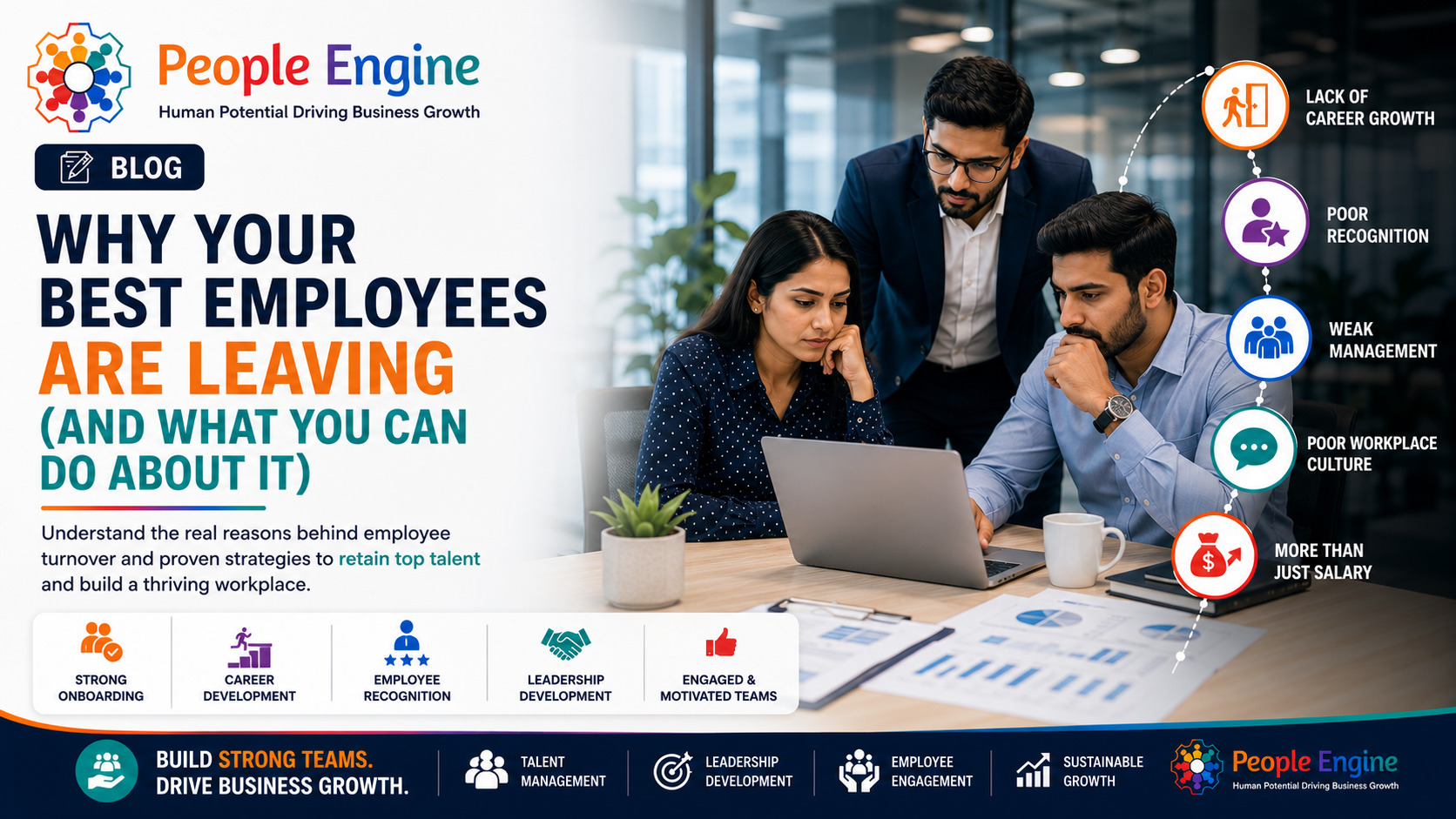
Hiring great talent is difficult. Keeping them is even harder.
Many SME owners and startup founders believe employees leave because of higher salaries. While compensation matters, it's rarely the only reason. In most cases, talented employees leave because they no longer see growth, feel valued, or enjoy coming to work.
High employee attrition doesn't just increase recruitment costs—it affects productivity, team morale, customer relationships, and business growth. The good news is that most of these challenges can be addressed with the right people strategy.
1. Poor Onboarding Creates a Weak First Impression
Employee retention starts on Day One.
Many organizations invest significant effort in hiring but overlook onboarding. New employees are often left to figure things out on their own, receive little guidance, or struggle to understand the company's culture and expectations.
A structured onboarding process helps employees feel welcomed, aligned with business goals, and confident in their roles. When employees experience a positive start, they are far more likely to stay engaged and committed.
2. Employees Can't See a Future in Your Company
One of the biggest reasons employees leave is the lack of career progression.
People want to know that their efforts today will lead to better opportunities tomorrow. When there are no learning opportunities, promotions, or development plans, employees begin searching for organizations that invest in their growth.
Creating clear career paths, offering leadership development, and conducting regular performance reviews are essential components of effective Talent Management.
3. Workplace Culture Matters More Than You Think
A positive workplace culture keeps people motivated.
Poor communication, unclear expectations, office politics, and lack of trust create an environment where employees feel disconnected. Even highly paid professionals eventually leave workplaces that negatively affect their mental well-being.
Organizations that promote collaboration, transparency, and psychological safety build stronger teams and experience better Employee Retention.
4. Employees Want Recognition, Not Just a Salary
People want to know their work matters.
When employees consistently deliver results without receiving appreciation or constructive feedback, motivation declines. Recognition doesn't always have to be financial. A simple acknowledgment, timely feedback, or celebrating achievements can significantly improve engagement.
Regular one-on-one meetings, performance discussions, and employee recognition programs help create a culture where people feel valued.
5. Managers Have a Bigger Impact Than You Realize
Employees often leave managers—not companies.
Many first-time managers are promoted because of technical expertise but receive little leadership training. Without effective communication, coaching, and conflict-resolution skills, even talented managers can unintentionally drive employees away.
Investing in leadership development helps managers build trust, inspire teams, and improve overall employee satisfaction.
Practical Strategies to Improve Employee Retention
Reducing employee turnover requires a long-term approach rather than quick fixes. Businesses should focus on:
- Designing a structured onboarding experience.
- Creating clear career development and succession plans.
- Conducting regular employee engagement and satisfaction surveys.
- Building a culture of recognition and continuous feedback.
- Investing in leadership and soft skills training.
- Prioritizing employee well-being and mental wellness.
- Reviewing HR policies to ensure fairness, transparency, and consistency.
Businesses that invest in their people don't just retain talent—they create stronger, more resilient organizations.
Conclusion
Employee retention is not just an HR responsibility; it's a business strategy. The organizations that succeed in today's competitive market are those that create workplaces where employees feel supported, appreciated, and inspired to grow.
At People Engine Solutions, we help startups, SMEs, and family-owned businesses build people-first organizations through psychology-backed HR consulting. From Talent Management, employee engagement, and leadership development to workplace policy design and organizational development, our solutions are designed to reduce attrition, strengthen workplace culture, and help businesses retain their best talent.
If your business is experiencing high employee turnover or struggling to build a high-performing team, People Engine Solutions can help you identify the root causes and implement practical HR strategies that drive long-term business success.