Every business owner has experienced this at some point.
You invest time and money to hire skilled professionals with impressive resumes and relevant experience. On paper, they seem like the perfect fit. But a few months later, productivity drops, collaboration suffers, and your team isn't delivering the results you expected.
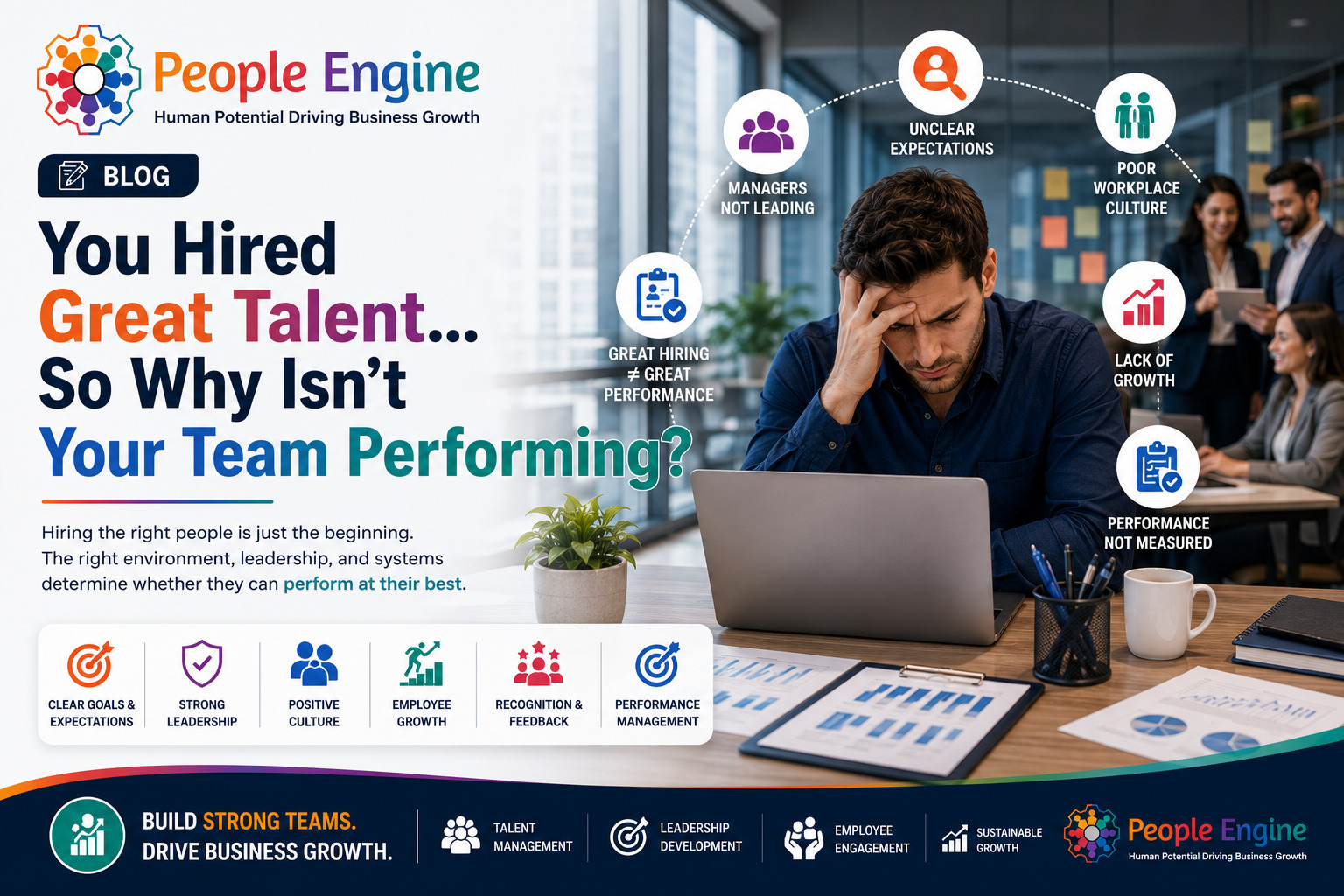
The problem isn't always the people you've hired. More often, it's the environment, leadership, and systems that determine whether talented individuals can perform at their best.
Let's explore the common reasons why high-potential employees fail to meet expectations—and what you can do to change it.
1. Great Hiring Doesn't Guarantee Great Performance
Recruitment is only the first step.
Many businesses focus heavily on hiring the right candidates but spend very little time helping them succeed after they join. Without clear expectations, defined responsibilities, and the right support, even the most capable employees struggle to perform.
Successful organizations understand that hiring and Talent Management go hand in hand.
2. Employees Don't Know What's Expected
One of the biggest productivity killers is unclear communication.
If employees don't understand their goals, priorities, or how success is measured, they often work hard without delivering meaningful results. Every team member should have:
- Clearly defined roles and responsibilities.
- Measurable performance goals.
- Regular performance reviews.
- Consistent communication with managers.
Clarity creates accountability, and accountability drives performance.
3. Managers Aren't Leading—They're Only Supervising
Many businesses promote top performers into managerial roles without preparing them to lead people.
Managing tasks is different from managing people. Employees need coaching, feedback, motivation, and support—not just instructions.
Investing in Leadership Training Services helps managers build trust, improve communication, resolve conflicts, and create high-performing teams.
4. Poor Workplace Culture Reduces Productivity
Even talented professionals lose motivation in the wrong environment.
A workplace with poor communication, lack of collaboration, favoritism, or constant stress makes it difficult for employees to perform consistently.
Organizations with a healthy culture encourage open conversations, recognize achievements, and create psychological safety where employees feel comfortable sharing ideas and asking for help. Strong culture is one of the biggest drivers of long-term business success.
5. Employees Aren't Growing
People perform better when they continue learning.
When employees feel their skills are stagnating or there are no opportunities for career growth, engagement declines. Over time, this affects productivity and increases employee turnover.
Providing skill development, mentoring, leadership opportunities, and career progression plans keeps employees motivated and invested in the organization's success.
6. Performance Isn't Being Measured
You can't improve what you don't measure.
Many businesses only discuss performance when problems arise. Instead, organizations should establish regular review systems with constructive feedback, measurable KPIs, and development plans. A structured performance management framework helps employees understand where they excel and where they need support.
How to Build a High-Performing Team
Improving team performance requires more than hiring talented people. Businesses should focus on:
- Creating structured onboarding programs.
- Setting clear goals and performance expectations.
- Investing in leadership and soft skills development.
- Building a culture of recognition and continuous feedback.
- Encouraging collaboration and open communication.
- Implementing performance appraisal and employee engagement systems.
- Aligning individual goals with business objectives.
When employees have the right environment, leadership, and support, their performance naturally improves.
Conclusion
Building a high-performing team isn't about hiring more talented people—it's about helping the talent you already have succeed. Businesses that invest in leadership, employee engagement, and structured HR practices create teams that are motivated, productive, and aligned with organizational goals.
At People Engine Solutions, we partner with startups, SMEs, and family businesses to unlock the full potential of their workforce. Through Talent Management Consultancy, Leadership Training Services, performance management frameworks, employee engagement strategies, and psychology-backed HR consulting, we help businesses transform talented individuals into high-performing teams.
If your team isn't performing despite hiring great people, it's time to look beyond recruitment. With the right HR strategy and expert guidance, People Engine Solutions can help you build a workplace where people—and your business—can thrive.